
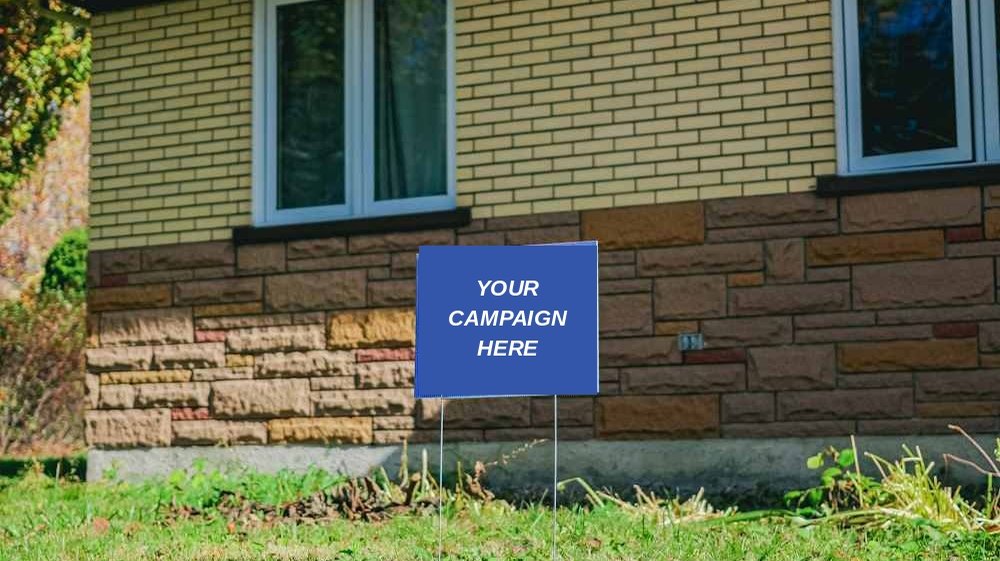
AR-Enabled Yard Signs
Campaign Type: AR-Enabled Outdoor Political Signage
Audience: Local voters and passersby
Delivery Method: Signage
Experience Type: AR Avatar Policy Explainers + Volunteer Engagement CTAs
Technologies: Augmented Reality (WebAR), Dynamic QR Codes, Geo-Specific Content, Digital Retargeting
Overview
This Use Case shows how AR-Enabled Yard Signs could turn traditional political signage into interactive engagement tools. Instead of being static name-recognition displays and nothing more, yard signs could become digital gateways that invite voters to scan a QR Code and immediately reach immersive, on-demand campaign content.
With Augmented Reality built into outdoor signage, AR-Enabled Yard Signs would let candidates speak directly to voters through an AR Avatar, explain policy positions in plain language and offer simple ways to take part. This approach would keep the visibility and familiarity of traditional yard signs while greatly expanding what they can communicate.
Campaign Background
Yard signs have long been a cornerstone of political communication. Placed in front yards, along roadways and in busy community areas, they provide visibility and reinforce candidate awareness.
Traditional signage, however, is limited to static messaging, typically a name, a logo and a slogan. It works well for exposure, but it doesn’t allow for detailed policy discussion, personalized communication or measurable engagement.
In an increasingly mobile-first world, voters expect information to be interactive and available instantly. AR-Enabled Yard Signs would meet that expectation by turning physical signs into entry points for immersive digital experiences. Augmented Reality wouldn’t replace the signage. It would enhance it and keep its local presence while adding new layers of communication.
Challenge
In this illustrative scenario, a campaign using AR-Enabled Yard Signs would aim to address several communication challenges:
- Extending the impact of yard signs beyond visual awareness
- Explaining complex policy topics clearly and concisely
- Making voter engagement simple and immediate
- Delivering messaging that feels locally relevant
- Bridging offline visibility with online participation
Traditional yard signs are highly visible but shallow. AR-Enabled Yard Signs would be designed to overcome that limit by combining print visibility with interactive digital storytelling.
Solution
The campaign could be delivered like this:
- AR-Enabled Yard Signs: Each yard sign would carry a prominently placed Dynamic QR Code designed for easy smartphone scanning. The code would be the link between the physical sign and the Augmented Reality experience.
- AR Avatar Policy Presentation: On scanning the QR Code, voters would launch a WebAR experience featuring an AR Avatar of the candidate. The Avatar could give a concise introduction, outline key policy priorities and explain campaign goals in a conversational way. Complex topics could then be communicated in a way that feels direct, personal and easy to understand, without voters having to search for more information.
- Geo-Specific Content: The AR interface could adapt its messaging to location. For example, the experience could highlight community-specific concerns, local initiatives or district-focused priorities. That would help communication feel relevant and not generic.
- Digital Retargeting: People who interact with AR-Enabled Yard Signs could be added to digital audiences for follow-up communication. Campaign messaging would then stay consistent across physical and digital channels and reinforce awareness and engagement over time.
- Engagement Insights: Interaction data could be collected to show which sign locations generate the most engagement and which policy topics draw interest. These insights could shape ongoing communication strategy and decisions about where to place signs.
Why AR-Enabled Yard Signs Work
AR-Enabled Yard Signs would extend the influence of outdoor signage by adding interactivity, personalization and immediacy.
Traditional yard signs rely on repetition and visibility. AR-Enabled Yard Signs would pair visibility with depth. The physical sign would catch the eye, and the AR experience would supply the substance.
The AR Avatar would humanize messaging and make policy explanations feel more direct and accessible. Geo-Specific Content would add relevance and make sure communication reflects local priorities. Digital Retargeting would let engagement continue beyond the first scan.
By joining physical presence with immersive digital communication, AR-Enabled Yard Signs would create a smooth bridge between offline awareness and online engagement, without losing the simplicity and effectiveness of traditional signage.
Conclusion
AR-Enabled Yard Signs would be a real step forward for political outdoor communication. By combining the established visibility of yard signs with the interactive capabilities of Augmented Reality, campaigns could create signage that not only catches attention but also informs, engages and invites participation.
In a digitally connected world, AR-Enabled Yard Signs would no longer be static markers of support. They would become interactive gateways that turn local visibility into dynamic voter engagement and change what campaign signage can do.
Contact Us if you’d like to learn more about adding Interactive Yard Signs to your campaign marketing.